The launch of the Yamaha RX100 2026 is not just another motorcycle release in India; it is the revival of an emotion that defined an entire generation of riders. Few motorcycles in Indian history have achieved the cult-like status that the RX100 once enjoyed. From its unmistakable exhaust note to its lightweight, explosive performance, the RX100 symbolized freedom, rebellion, and raw motorcycling pleasure. Bringing such a legendary nameplate back in a completely different regulatory and market environment was never going to be simple, but Yamaha has taken on the challenge with confidence and respect for its heritage.
With stricter emission norms, evolving safety regulations, and a modern buyer who expects reliability along with nostalgia, the Yamaha RX100 2026 has been carefully reimagined. Instead of blindly copying the past, Yamaha Motor India has focused on preserving the spirit of the RX while making it practical for today’s Indian roads. This new model targets a wide audience—older riders who once owned or admired the original RX100, as well as younger riders who want a lightweight, character-rich motorcycle that stands apart from the crowded commuter segment.
Positioned in the premium commuter category, the Yamaha RX100 2026 blends classic styling, modern engineering, everyday usability, and strong fuel efficiency. It aims to deliver an engaging riding experience without excessive complexity, staying true to what the RX brand has always stood for.
Key Specifications – Yamaha RX100 2026
| Specification | Details |
|---|---|
| Engine | 125cc, single-cylinder, air-cooled |
| Fuel Type | Petrol |
| Max Power | 11.5 PS |
| Max Torque | 11 Nm |
| Transmission | 5-speed manual |
| Mileage (Claimed) | 60–65 kmpl |
| Emission Norms | BS6 Phase 2 |
| Front Suspension | Telescopic forks |
| Rear Suspension | Twin shock absorbers |
| Front Brake | Disc |
| Rear Brake | Drum |
| Kerb Weight | Approx. 118 kg |
| Fuel Tank Capacity | 10 litres |
| Starting Price | ₹1.25 lakh (ex-showroom) |
Exterior Design and Styling
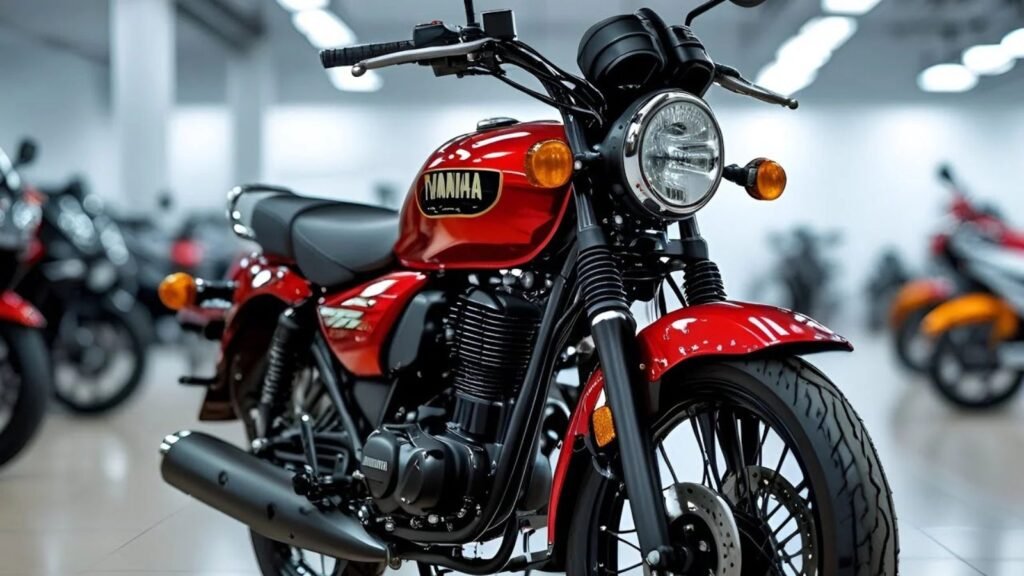
One look at the Yamaha RX100 2026, and it is immediately clear that Yamaha has respected the visual DNA of the original motorcycle. The design stays refreshingly simple in an era dominated by sharp angles and over-styled body panels. The round headlamp, flat single-piece seat, slim side panels, and iconic teardrop-shaped fuel tank bring back memories of the classic RX100 that once ruled Indian streets.
The proportions remain compact and balanced, making the Yamaha RX100 2026 instantly recognizable. Yamaha has resisted the temptation to modernize the bike excessively, which works in its favor. Subtle updates such as improved paint quality, refined chrome elements, and neatly integrated LED lighting ensure the bike looks premium without losing its old-school charm.
The upright stance and minimal bodywork make the motorcycle visually light, which also translates into easy handling in real-world conditions. Colour options like classic black with gold pinstripes, deep racing blue, and a modern metallic grey allow buyers to choose between pure nostalgia and contemporary elegance. Whether parked outside a café or weaving through city traffic, the Yamaha RX100 2026 stands out effortlessly.Engine, Performance, and Real-World Riding Experience
The heart of the Yamaha RX100 2026 is a newly developed 125cc, air-cooled, four-stroke engine designed to meet BS6 Phase 2 emission norms. While long-time RX fans may miss the raw aggression and sound of the original two-stroke engine, this modern unit focuses on usability, refinement, and reliability.
In daily riding conditions, the engine feels responsive and eager. The lightweight chassis, combined with smooth throttle calibration, ensures quick acceleration from a standstill—something that made the original RX100 famous. City riding feels effortless, and overtaking slow-moving traffic requires minimal planning.
The power delivery is tuned for strong low- and mid-range torque, making the Yamaha RX100 2026 perfectly suited for Indian road conditions. The five-speed gearbox shifts smoothly, and the gear ratios are well-matched for both city commutes and short highway rides. There is no sense of strain during normal riding, and the engine remains composed even when pushed closer to its limits.
On open highways, the Yamaha RX100 2026 can cruise comfortably at 80–85 kmph. While it is not designed for high-speed touring, it offers enough stability and confidence for occasional longer rides. The refined engine note, combined with minimal vibrations, ensures a pleasant riding experience over extended distances.
Mileage and Fuel Efficiency
Fuel efficiency has always been a crucial factor for Indian motorcycle buyers, and the Yamaha RX100 2026 delivers strong numbers in this area. Yamaha claims a mileage figure of 60–65 kmpl, which is impressive given the bike’s performance-oriented tuning.
In real-world riding conditions, riders can expect consistent efficiency across city and highway usage. For daily commuters, this translates into significantly lower running costs, especially in times of fluctuating petrol prices. The 10-litre fuel tank provides a practical riding range, reducing the need for frequent fuel stops during the week.
The engine’s smooth power delivery and efficient combustion also ensure that mileage remains stable even after prolonged use. For riders who want an emotional motorcycle without sacrificing fuel economy, the Yamaha RX100 2026 strikes a well-balanced compromise.
Rider Comfort and Ergonomics
Despite its retro-inspired design, the Yamaha RX100 2026 offers a surprisingly comfortable riding experience. The upright handlebar position, neutral footpeg placement, and well-cushioned seat make it suitable for long hours of riding without fatigue.
The seat height is approachable for riders of varying heights, and the slim profile makes it easy to place both feet on the ground at traffic signals. This accessibility makes the Yamaha RX100 2026 especially appealing to new riders and those upgrading from smaller motorcycles.
Suspension tuning is on the softer side, allowing the bike to handle potholes, speed breakers, and uneven road surfaces commonly found in Indian cities. The lightweight kerb weight further enhances maneuverability, making tight turns and crowded parking areas stress-free.
Features and Technology
The Yamaha RX100 2026 does not aim to overwhelm riders with unnecessary electronics. Instead, it focuses on essential modern features that improve convenience while preserving the bike’s mechanical feel.
A semi-digital instrument cluster provides clear information such as speed, fuel level, trip meter, and service reminders. The layout is easy to read even under bright sunlight, maintaining the simplicity that RX fans appreciate.
Additional features include electric start, side-stand engine cut-off, and maintenance-friendly components. Yamaha has deliberately avoided advanced rider aids or complex electronics, ensuring that the Yamaha RX100 2026 remains approachable and reliable over the long term.
Safety, Build Quality, and Compliance
Safety has received a meaningful upgrade in the Yamaha RX100 2026 compared to older commuter motorcycles. The front disc brake offers confident stopping power, while the rear drum brake provides balanced braking performance for daily use.
The chassis feels sturdy, and overall build quality reflects Yamaha’s reputation for durability. Switchgear, panels, and fittings feel robust, designed to withstand years of regular riding. Compliance with BS6 Phase 2 emission standards ensures cleaner emissions and future-proof ownership.
For Indian buyers who prioritize peace of mind and long-term reliability, the Yamaha RX100 2026 delivers a reassuring ownership experience.
Variants and Colour Options
To keep the buying process simple, Yamaha offers the Yamaha RX100 2026 in a single, well-equipped variant. This approach ensures that all buyers receive the same core experience without confusion.
Colour options include classic black, racing blue, and metallic grey. Yamaha may introduce limited-edition colour schemes in the future, depending on market demand and customer feedback.
Price Positioning and Competition
With a starting price of approximately ₹1.25 lakh (ex-showroom), the Yamaha RX100 2026 is positioned slightly above entry-level commuters. It competes indirectly with models like the Hero Xtreme 125R and TVS Raider 125, but its real advantage lies in its heritage and emotional value.
While competitors may offer more features on paper, none can match the legacy and character of the Yamaha RX100 2026. For many buyers, that emotional connection alone justifies the premium.
Who Should Buy the Yamaha RX100 2026
The Yamaha RX100 2026 is ideal for riders who value simplicity, character, and everyday usability. It suits daily commuters, nostalgic enthusiasts, and young riders seeking a lightweight, engaging motorcycle.
It may not be the most feature-rich option in its segment, but it excels in delivering a pure, enjoyable riding experience that few modern motorcycles can replicate.
Final Verdict
The Yamaha RX100 2026 is a respectful and well-thought-out revival of a true Indian legend. By blending classic design with modern engineering, Yamaha has created a motorcycle that honors its past while fitting seamlessly into today’s market. While it cannot recreate the magic of the two-stroke era entirely, it succeeds as a modern interpretation that delivers performance, efficiency, and unmatched nostalgia.
For riders who believe motorcycles should have soul, the Yamaha RX100 2026 is more than just a commuter—it is a statement.
FAQs
What is the price of the Yamaha RX100 2026 in India?
The expected starting ex-showroom price is around ₹1.25 lakh.
Is the Yamaha RX100 2026 a two-stroke motorcycle?
No, it uses a modern four-stroke 125cc engine to comply with emission norms.
What mileage can buyers expect from the Yamaha RX100 2026?
Real-world mileage is expected to be around 60–65 kmpl.
Is the Yamaha RX100 2026 suitable for daily commuting?
Yes, its lightweight design, comfortable ergonomics, and fuel efficiency make it ideal for everyday use.
Does the Yamaha RX100 2026 comply with BS6 Phase 2 norms?
Yes, it fully meets BS6 Phase 2 emission standards.